


Why Liquid-Filled Pressure Gauges Perform Better in High-Vibration Applications
Time of Release : 2025-12-17


Vibration Is the Real Enemy of Accurate Pressure Readings
Anyone who has worked around pumps, compressors, or hydraulic systems knows how brutal vibration can be on instruments. Even when pressure levels are stable, constant shaking makes gauge needles bounce, blur, and wear out faster than expected. Dry pressure gauges struggle in these conditions because every vibration transfers directly to the internal movement. This is where a liquid-filled pressure gauge quietly proves its value. Instead of fighting vibration mechanically, it absorbs it. The result is a gauge that stays readable, lasts longer, and behaves far more predictably in real industrial environments.

What Liquid Filling Actually Does Inside the Gauge
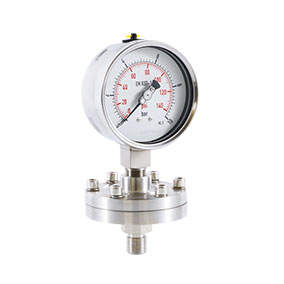
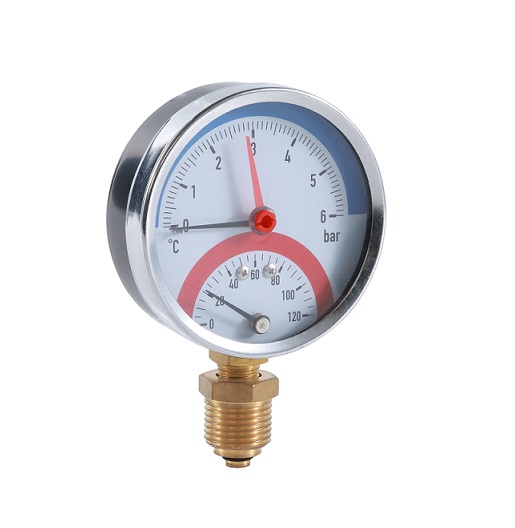
A liquid-filled pressure gauge is filled with glycerin or silicone oil that surrounds the internal components. That liquid creates resistance against sudden movement, acting like a built-in shock absorber. When vibration or pressure pulsation occurs, the fluid slows down the needle movement instead of letting it react instantly. This makes readings smoother and easier to interpret, especially at a glance. More importantly, the damping effect reduces stress on the Bourdon tube and gear mechanism, which are usually the first parts to fail in high-vibration installations.
Why Reduced Movement Means Longer Gauge Life
Excessive needle movement isn’t just annoying—it causes real mechanical damage over time. In dry gauges, constant oscillation accelerates wear, loosens linkages, and slowly throws off calibration. A liquid-filled pressure gauge limits that internal motion. The liquid also provides light lubrication, which further protects moving parts. In practice, this means fewer gauge replacements, fewer maintenance interruptions, and better long-term accuracy. For plants running continuously, that reliability often matters more than saving a few dollars on the initial purchase.
Where Liquid-Filled Gauges Make the Biggest Difference
High-vibration conditions are not limited to one industry. أجهزة قياس الضغط المملوءة بالسوائل are commonly used in pump systems, compressor stations, hydraulic power units, and chemical processing lines. They are also widely installed on mobile equipment and marine systems where motion is constant. In these environments, operators don’t want to guess at pressure values or question whether a needle is shaking because of vibration or a real process issue. Liquid-filled designs remove that uncertainty and provide stable, trustworthy readings.
Selection Tips That Matter in the Field
Not all liquid-filled gauges are the same. Glycerin-filled versions work well for most standard industrial environments, while silicone-filled gauges are better suited for low temperatures or outdoor use. Material selection also matters—stainless steel cases and wetted parts are often preferred for aggressive or corrosive media. In systems with extreme pulsation, pairing a liquid-filled pressure gauge with a snubber or damper can further improve performance. Choosing the right combination upfront avoids problems later.
Built for Real Applications by An Hui Exact Instrument.
A liquid-filled pressure gauge is not about luxury—it’s about solving a practical problem. أداة هوي الدقيقة is an international instrument manufacturer focused on the design, production, and sales of instruments, instrument pipes, and valves. Our products are developed for real operating conditions, not ideal ones. By understanding vibration, pressure behavior, and installation challenges, we help customers select reliable measurement solutions that perform consistently and reduce long-term maintenance costs.