



When Should You Choose a Capillary Thermometer Over a Digital Thermometer?
Time of Release : 2026-01-16


In the field of temperature measurement, capillary thermometers and digital thermometers each have their advantages and disadvantages. In many situations, digital thermometers are favored for their convenience and quick readings. However, capillary thermometers demonstrate irreplaceable advantages in certain specific scenarios. This article will explore when to choose a capillary thermometer over a digital thermometer to help users make a better choice.
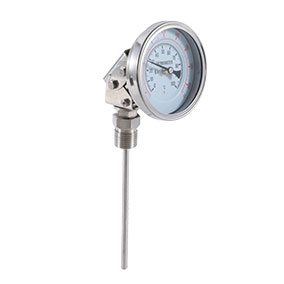
First, capillary thermometers excel in high accuracy and stability. Due to their use of the principle of liquid expansion, capillary thermometers can provide very precise readings even with small temperature changes. This makes them the preferred choice in laboratory environments or scientific research, especially when accurate temperature measurement is required. For example, in chemical reactions, small temperature changes can affect the reaction rate and outcome; using a capillary thermometer ensures data accuracy in such cases.
Second, the suitability of capillary thermometers for extreme environments is also noteworthy. The electronic components of some digital thermometers may not function properly in high-temperature, high-pressure, or highly corrosive environments, while capillary thermometers can generally withstand a wider temperature range and harsher environments. This gives it an irreplaceable advantage in certain industrial applications, such as metal smelting or chemical production. In these cases, the durability and reliability of capillary thermometers make them the preferred choice for many professionals.
Furthermore, industrial capillary thermometers are generally less expensive than high-end digital thermometers, allowing them to provide a reliable temperature measurement solution even on a budget. In educational institutions or beginner laboratories, capillary thermometers not only offer lower costs but also help students gain a deeper understanding of the principles of temperature measurement, cultivating their hands-on skills and scientific thinking.
Furthermore, capillary thermometers are relatively easy to use. While digital thermometers provide intuitive displays, some users may find debugging and operating electronic devices difficult. Capillary thermometers, on the other hand, simply require placement in the medium to be measured, and the temperature can be read after a short time, avoiding complex operating procedures and making them suitable for various users.
Finally, capillary thermometers still hold a place in the standards and regulations of certain industries. For example, in the pharmaceutical and food industries, some regulations require the use of traditional temperature measurement methods to ensure product quality and safety. In such cases, capillary thermometers are considered temperature measurement tools that meet industry standards. Capillary thermometers remain a significant advantage in situations requiring high precision, operating in extreme environments, facing budget constraints, and adhering to industry standards. Choosing the right temperature measurement tool is crucial for ensuring accuracy in experiments and production. In this process, An Hui Exact Instrument’s professional equipment and technical support provide reliable assurance for users’ temperature measurement needs.